On July 31, 2026, California Department of Finance Director Joe Stephenshaw officially certified an increase to California’s statewide minimum wage. Effective January 1, 2027, the minimum wage for all employers in California will increase from $16.90 to $17.40 per hour. The new minimum wage amount is the highest statewide minimum wage in the country, with many states still at $7.25 per hour.
Under California Labor Code Section 1182.12, the Director of Finance is required each year to determine whether the state minimum wage should be adjusted for inflation. The annual adjustment is based on the lesser of:
- A 3.5% increase; or
- The actual rate of change in the U.S. Consumer Price Index (CPI).
For the period of July 1, 2025, through June 30, 2026, the CPI increased by 2.99%, resulting in a corresponding increase to the California minimum wage of $17.40 per hour beginning January 1, 2027.
Impact on Exempt Employee Salary Requirements
The increase also affects the minimum salary threshold for full-time exempt employees in California. Beginning January 1, 2027, the minimum annual salary required for exempt status will increase to:
- $72,384 per year
- $6,032 per month
- $1,392 per week
This represents an increase from the current minimum salary requirement of $70,304 annually ($5,858.67 per month).
Special Industry Minimum Wage Rates
Employers should be aware that different minimum wage requirements apply to certain industries:
- Fast food employees covered by California Labor Code Sections 1474-1476 are currently entitled to a minimum wage of $20.00 per hour.
- Healthcare workers are subject to separate minimum wage rates that vary based on the type of healthcare facility. Several of these rates increased on July 1, 2026.
These industry-specific wage rates also affect exempt employee salary thresholds. To qualify as exempt:
- Covered fast food employees must earn at least twice the applicable fast food minimum wage.
- Covered healthcare employees must earn at least 1.5 times the applicable healthcare minimum wage rate or twice the state minimum wage, whichever is greater.
Local Minimum Wage Requirements
Many California cities and counties maintain local minimum wage ordinances that require employers to pay rates higher than the statewide minimum wage. Jurisdictions such as Emeryville, Los Angeles, San Diego, and San Francisco are among those with higher local minimum wage requirements.
Employers must pay the higher local rate whenever it exceeds the state minimum wage. However, only the California state minimum wage is used to determine the minimum salary threshold for exempt employees; local minimum wage rates do not impact this calculation.
For a list of local minimum wages for cities and counties in California, visit our website here.
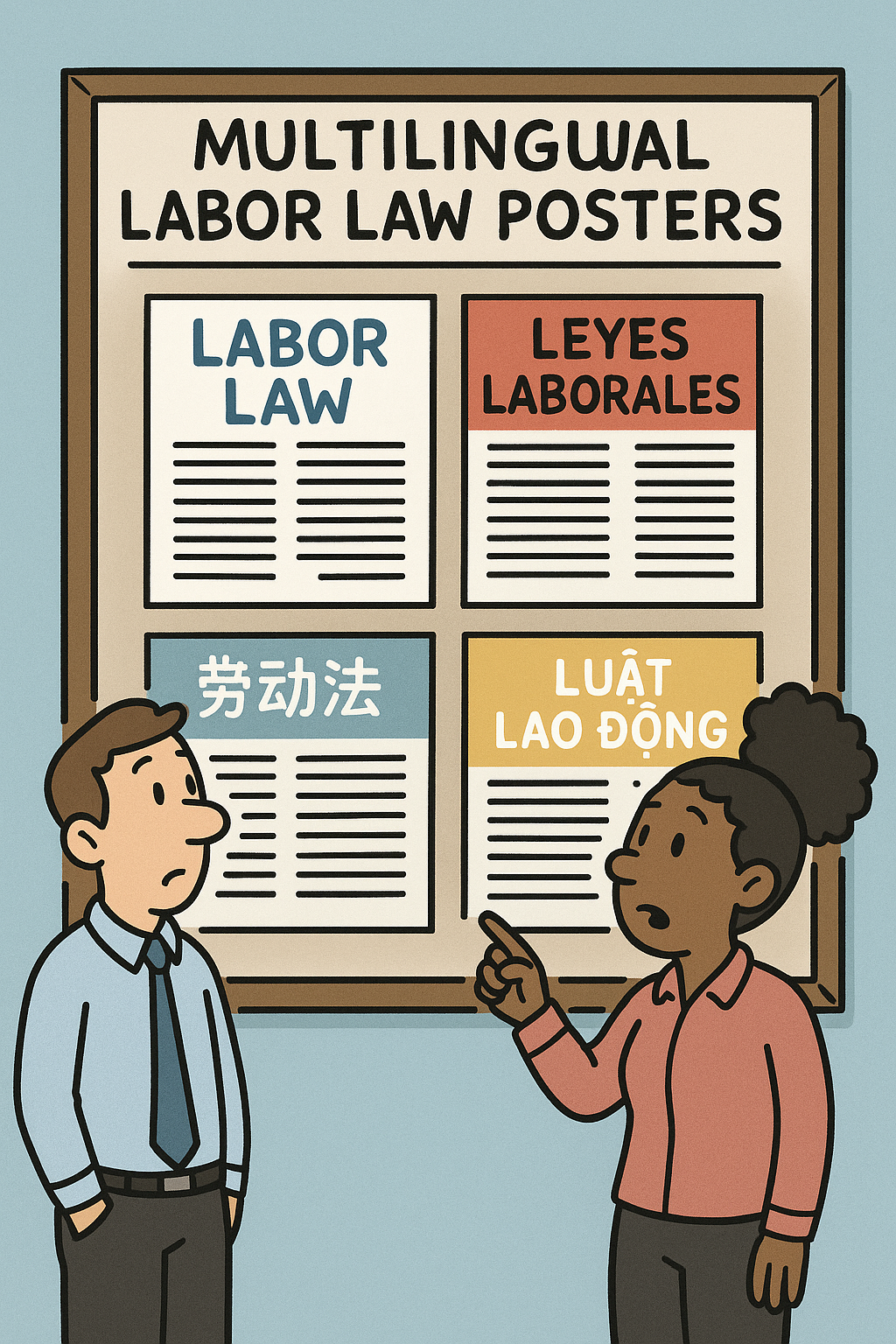
Update the Required Labor Law Posters.
To meet workplace posting obligations, the increased wage must be reflected on mandatory Labor Law postings to ensure compliance. Contact us if you need an automated solution for your company’s posters.